
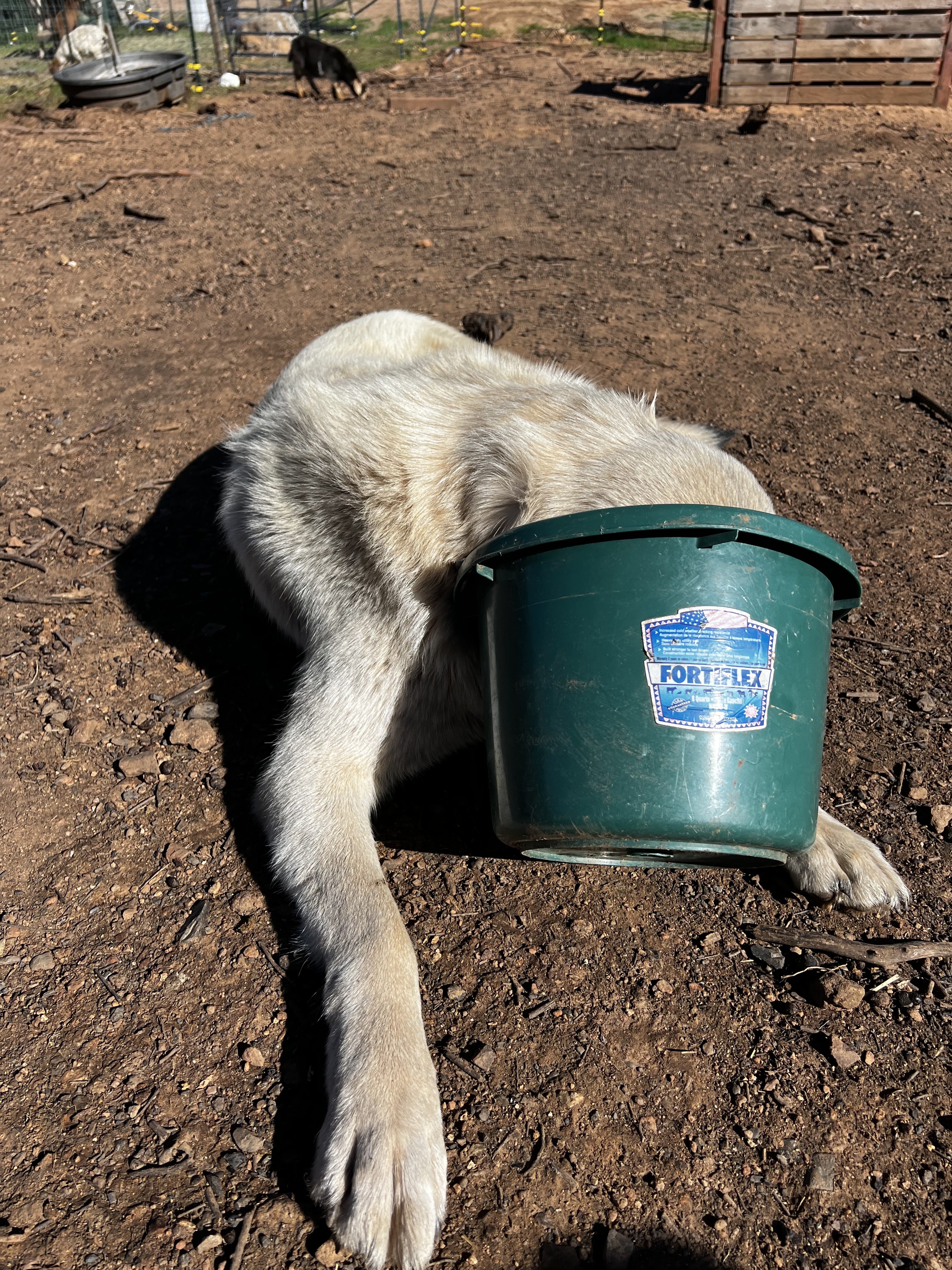
LGD Self-feeder vs Bowl Feeding
Feeding livestock guardian dogs (LGDs) can be approached in various ways depending on the size of the property, the number of dogs, their individual needs/behaviors, and your personal preferences. The two methods we have used are self-feeders and hand (bowl) feeding.
We started with self-feeders for our LGDs and really enjoyed the ease of the self-feeder. It was nice to not worry about a daily scheduled feeding time because the dogs always had food. However, our females started to resource guard which caused a few nasty fights. We hoped that as the girls got older, and got spayed, the issue would go away but it didn’t. So, we gave up the convenience of self-feeders and have been hand-feeding ever since. There have been no fights since we started hand-feeding and, for us, the extra effort is well worth it to avoid skirmishes between the dogs. We also find that our dogs adapted well to the change and enjoy the extra attention they get from us feeding them once a day.
Below are the two ways we have fed our LGDs and their pros and cons.
Hand Feeding (AKA Bowl Feeding)
Bowl feeding is the traditional way most dog owners feed their dogs. Bowl feeding, also called hand feeding, means the owner gives the LGD food portions at scheduled times once or twice a day. There are pros and cons to hand feeding:
Pros
- Portion control: Hand feeding allows you to be sure your LGD is getting the right amount of food to prevent overeating.
- Appetite monitoring: It is also useful for identifying appetite changes. For example, a decrease in appetite could be a symptom of a bigger issue.
- Training: Having a bowl of food in your hand is a great way to train your LGD. You can use mealtime as a chance to practice commands such as “sit,” “stay,” or “leave it.”
- Protected from livestock: Livestock will eat dog food if they have access to it. Hand feeding gives you more control to ensure livestock don’t eat your dog’s food.
- Reduce or eliminate competition: Providing each dog with their own bowl reduces competition and potential conflict over food. This can help prevent food aggression and ensure that each dog gets their fair share of food.
Cons
- More time / effort: Bowl feeding requires someone to physically feed your dogs once or twice a day. You, or someone else, must be present and available every day.
- May be challenging on large properties: For those with large properties, bowl feeding may not be appropriate as your LGDs will be following their herd which means they will not always be in the same place at the same time.
Self-feeders
Under the right circumstances, self-feeders are very easy and convenient. We used gravity-fed self-feeders and our dogs could eat at any time they pleased. We did not have any issues with overeating and most LGD breeds do not tend to overeat. Below are pros and cons to self-feeders:
Pros
- Free Choice: Your LGD will have access to food at all times and can eat whenever they feel hungry. This reduces their anxiety about a specific feeding time and can help with jumping/excitement issues.
- Convenience: Self-feeders can carry 50 lbs or more of dog food. This means you only have to fill the feeder once every few weeks, depending on how many dogs you have.
Cons
- Must be protected from livestock: Goats, and likely other livestock, will eat dog food if it is available. A structure or fence must be built around the self-feeder to keep livestock out but allow the LGDs to get in.
- Weather: Self-feeders are not 100% weather proof if they are not covered by another structure. This means some dog food may get wet and spoil.
- Resource guarding: Some LGDs become protective of their food and will pick fights with other dogs. This can lead to injuries and heightened stress for the LGDs and yourself.
- Limited Monitoring: You might miss signs of health issues if you’re not regularly observing your dog’s eating habits.
Leave a Reply