
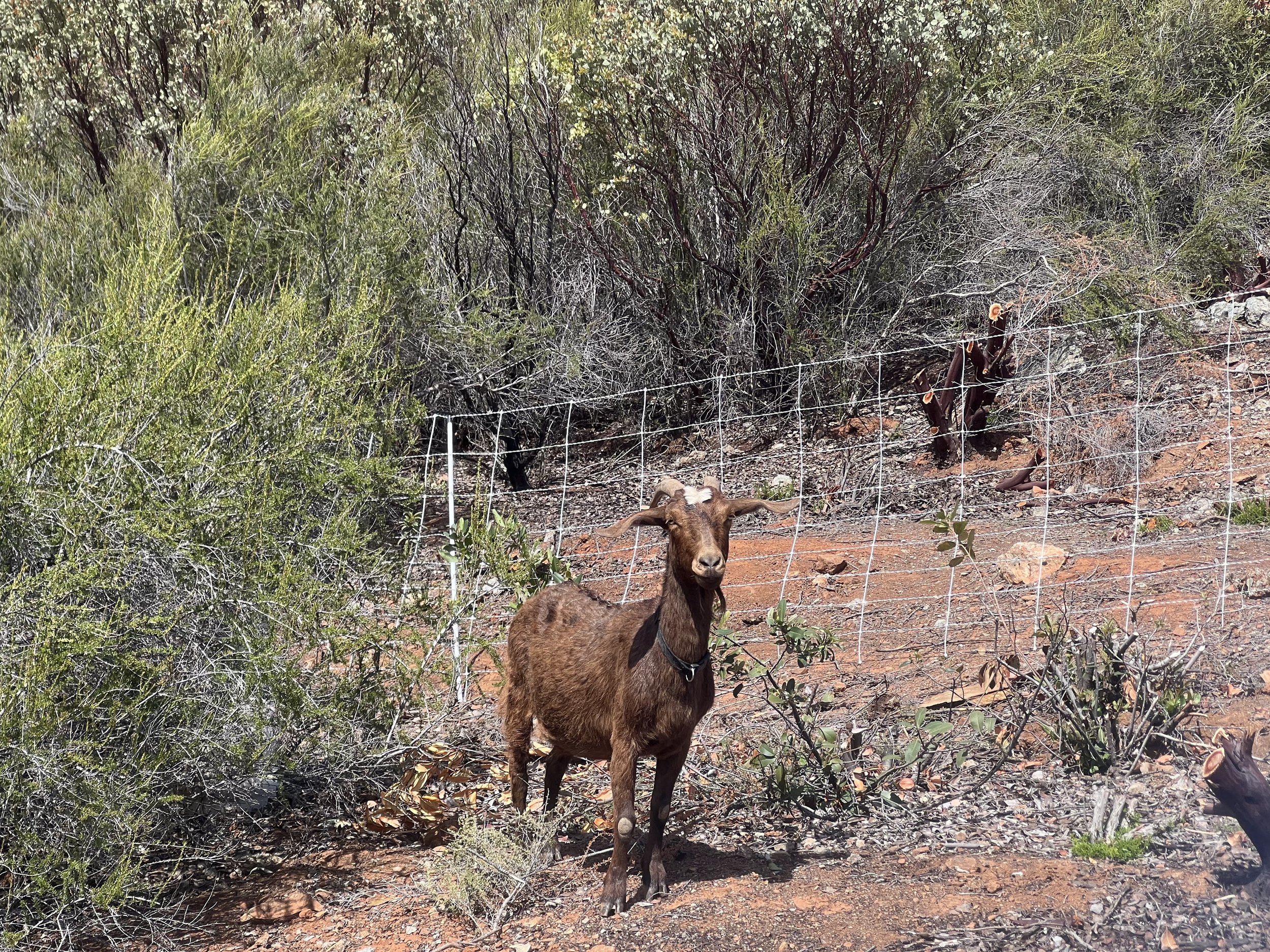
Goats have specific dietary needs that are important for new goat owners to understand. A proper diet leads to a healthy goat. Your feeding schedule and mix may vary depending on your location, property size, and goals. In this guide, we’ll explore the fundamentals of what to feed your goats.
Goat Food
Browse and Pasture:
Goats are natural foragers, and providing access to quality forage and pasture is paramount. A diverse mix of grasses, legumes, and brush allows goats to obtain essential nutrients and maintain digestive health. Rotate pastures to ensure fresh forage and prevent overgrazing. If you are planting new pasture or overseeding a current pasture, look online for goat seed mixes that grow well in your area. Or, even better, go to your local feed store and ask if they have a mix of local seeds.
Hay:
Supplement pasture with high-quality hay, especially during seasons when grazing is limited. Ensure that hay is clean, free of mold, and stored in a dry, well-ventilated space. We like to use orchard hay on a regular basis and mix in alfalfa when needed (ie. pregnant does, growing kids) due to its high protein and calcium content. However, alfalfa should be fed in small amounts because overfeeding can lead to urinary calculi in wethers. It is useful to reserve alfalfa for the goats that truly need it to avoid issues.
Grain:
Depending on your goat’s life stage and purpose (dairy, meat, grazing), you may need to supplement their diet with grain. There are many grain options specially formulated for goats at feed stores. Sweet feeds contain molasses so, of course, goats love them. However, we reserve sweet feed for treats, training, or coaxing a sick goat to eat more. Start with 1 cup per day per adult goat to avoid overfeeding issues.
Minerals:
Often, goats do not get all the minerals they need from pasture, hay, and grain. It is essential to provide a high-quality mineral supplement designed for goats. Pay attention to the label and check for key minerals such as selenium, zinc, copper, and iron. Offer the minerals “free-choice” in small containers that are easily accessible and protected from rain.
Fresh Water:
Always ensure a clean and abundant supply of fresh water. Hydration is crucial for proper digestion. Regularly clean water containers to prevent the buildup of algae and encourage adequate water intake.
Occasional Treats:
Offer fruits and vegetables as occasional treats to add variety to your goat’s diet. Apples, carrots, and leafy greens are popular, and can be fun to watch your goats eat. Remember, these are occasional treats. Too many fruits or veggies can give your goats digestive issues.
Feeding your goats a balanced diet is a key responsibility for goat owners. By understanding their nutritional needs and providing a diverse and well-managed diet, you contribute to the overall health and happiness of your furry companions. Regular observation, access to quality forage, and a thoughtful approach to supplementation will help ensure your goats thrive!
Comments
2 responses to “What to Feed Your Goats”
[…] Feed and water management: Provide clean and fresh feed and water sources to ensure optimal nutrition and hydration. Avoid feeding on the ground and use raised feeders to minimize fecal contamination. Check out more on what to feed you goats here! […]
[…] goats comes with certain expenses, including feed, veterinary care, fencing, and shelter maintenance. Create a budget that encompasses these costs […]